Tanis Fishman
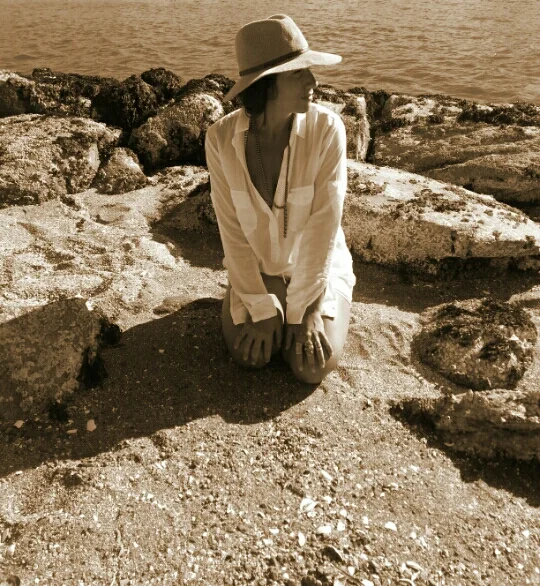
tanis fishman
Contemplative Inquiry, Direct Experience & the Search for What Is True
~
For as long as I can remember, there has been a question underneath my life:
What is this?
Even as a child, while other children seemed able to play and get on with being children, I remember wondering why I was here. I didn't understand what this life was, what I was doing in it, or what any of us were doing here. I had no spiritual language for those questions. I simply didn't get it.
In many ways, I still don't.
What has changed is how deeply I have lived the question.
I have taken What is this? seriously. Seriously enough to follow it into meditation, spiritual traditions, Yoga Nidra, Sankalpa, pilgrimage, altered states of consciousness, profound experiences of unity and awakening, experiences I still cannot explain, and long periods of study and contemplation. Seriously enough to spend years inside a question when I could not resolve it. Seriously enough to examine beliefs I once held with certainty when something in my experience began to challenge them.
This isn't simply the subject of my work. It is the way I have lived my life.
When something challenges my understanding of reality, I want to look at it. I want to get close enough to see what is actually there. I want to experience what I can directly, study the maps human beings have created around it, and understand what those maps reveal and what they may cause us to assume.
And if following a question honestly changes what I know, I want to be willing to let it change me.
That part can be difficult.
Some of the understandings I have questioned were hard won. I spent years studying them, practicing them, teaching them, and living from them. Some emerged through experiences so profound that they changed my perception of reality. There can be tremendous vulnerability in looking again at something that once felt unquestionably true.
Still, I would rather know that my understanding has changed than protect an answer because I have invested years of my life in it.
This doesn't mean I distrust everything I have experienced or learned. There are things I know through experience with extraordinary clarity. There are bodies of work I have studied deeply and can teach with confidence. There are recognitions that have permanently changed me. And there are places where the most sincere answer I have is:
I don't know.
Alongside all of this is genuine appreciation. I can be stopped by beauty, moved by love, overwhelmed by nature, astonished by consciousness, or struck by the sheer strangeness of being alive. Yet appreciation has never resolved the underlying bewilderment for me.
I still don't understand what this is.
Increasingly, I find myself looking beneath the spiritual ideas that once seemed to answer that question.
I have had experiences that felt utterly undeniable and spent years within frameworks that helped me understand what those experiences meant. Over time, another question began to emerge:
How do we know what is actually true?
That question has changed the way I meet my own experiences, the spiritual traditions I have studied, and some of the understandings I once held with certainty.
It has also returned me, in a different way, to the question that was there at the beginning:
What is this?
I began there.
In many ways, I am still there.
My Path
From an early age, I trained as a high-performance athlete. As a member of the Canadian National Ski Team, my world revolved around competition, discipline, and constant refinement. Even within that life, something in me felt slightly out of place. My body was fully committed to the path, while inwardly I carried questions that had nowhere to go. I didn't yet have language for them.
In many ways, life initiated me into the work I do today.
An Experience I Couldn't Explain
When I was nineteen, I was in a serious car accident. One of my closest friends was severely injured. I walked away physically unharmed, yet something happened during the accident that I could not understand within my existing view of reality.
I experienced what I can only describe as an out-of-body awareness. My perception seemed to shift above the scene, and from there I watched the event unfold from a place that felt spacious and still.
For a long time, I understood that experience as evidence that consciousness was somehow able to exist beyond the body. Today, I hold the interpretation more carefully.
I know I had the experience. What the experience ultimately tells me about consciousness is a different question.
At nineteen, I had no way of knowing where that question would lead.
Not long afterward, I tore my ACL. My skiing career came to an abrupt end. The life around which I had organized myself closed almost overnight, and I found myself standing at the beginning of something I had not yet learned how to name.
When Reality Shattered Open
For four days, I experienced no separation between myself and reality. For years, I thought that experience proved oneness was the fundamental nature of existence. I'm no longer sure it proves that.
Years later, while attending a meditation retreat in India, something happened that completely altered my understanding of reality. We were on a break from practice, and I was walking outside along a road. I remember passing a cow. There was nothing particularly extraordinary about the moment. I was simply walking.
Then, in an instant, reality as I had known it shattered.
The closest way I can describe it is that my consciousness spilled into everything, or everything spilled into me. The boundary that had always seemed to locate me here and the rest of existence out there simply disappeared. I could no longer find a place where I ended and the world began.
I became one with everything.
The road, the cow, the trees, the sky, the space around me, what I would ordinarily have called my body, and everything appearing within perception were no longer experienced as separate things. There was one indivisible field. The sense of being a person standing inside it and observing it was gone.
I was the field.
There was no separation anywhere.
And the field was love.
I had known human love before, with all of its beauty, attachment, longing, intimacy, need, and relationship. This was unlike anything I had previously experienced. The love had no object. It wasn't directed toward someone or coming from someone. It wanted nothing in return. There was no exchange taking place and no personal story attached to it.
It was simply love. Benevolent, unconditional, pervasive.
I experienced it almost as a vibratory field of oneness, with everything arising within the same indivisible reality. Even the idea of connection no longer made sense because connection assumes separate things. In the experience itself, there was only oneness.
There was also an extraordinary clarity. It felt as though I had been dreaming without knowing I was dreaming and had suddenly awakened. The closest physical analogy I have is the moment your ears pop and you realize how muffled everything had been. Except this happened to my entire perception of reality. Everything seemed suddenly, astonishingly clear.
And somewhere within that clarity was recognition.
I knew this.
I remember the unmistakable sense that this existed, that somehow I had always known it existed, and that what I had previously taken to be the whole of reality was incomplete. At the time, the experience felt like confirmation of something I had known without knowing how I knew it.
During the experience there was nothing for me to figure out. Questions about what it meant or how to keep it weren't present. The ordinary sense of being a separate person had disappeared along with everything else.
For roughly four days, the intensity of the experience remained. I slept very little and ate very little. The sense of separation was absent, and I existed within a quality of unity, clarity, presence, and love unlike anything I had previously known.
What I find equally remarkable in retrospect is that when the intensity of those first days subsided, something fundamental about the way my mind functioned remained different for much longer.
For approximately a year, my mind was naturally present.
It didn't wander in the way I had always known a mind to wander. Attention seemed to remain with what was happening. There was very little movement away from the immediacy of experience into the usual streams of thought, fantasy, memory, anticipation, or internal commentary. Presence didn't feel like something I was practicing or trying to maintain. It was simply the natural condition of my mind during that period.
Occasionally, I would intentionally daydream simply because I could. There was something almost playful about deliberately allowing my mind to wander when wandering was no longer happening automatically.
Then, gradually, spontaneous thought returned. My attention began wandering again. The familiar structures through which I knew myself seemed to gather density, almost as though the constellation of identity I had lived within before India was slowly assembling itself again.
Eventually, the familiar “I” was back online.
And with it came longing.
The intensity of the awakening had passed. The sustained presence that followed it had also begun to recede. Now there was once again a person who remembered what had happened, knew how radically different reality had felt, and wanted to return.
I wanted to awaken again.
That longing became part of the search that followed. I turned toward spiritual traditions, meditation, prayer, devotion, philosophy, contemplative practice, and pilgrimage, trying to understand what had happened and whether there was a way to return to it.
For a long time, I understood India as having shown me the underlying nature of reality. Some spiritual traditions might call an experience like this awakening, nondual awareness, mystical union, or oneness. At the time, I had little doubt that I had been shown what was ultimately real.
The experience intensified a fascination that was already present in me. I wanted to understand consciousness, why our ordinary perception of reality could change so dramatically, what spiritual traditions had discovered through centuries of inquiry, and whether there were dimensions of existence that our usual ways of perceiving simply did not reveal.
Today, I can be completely faithful to the magnitude of what happened in India, including the certainty I experienced at the time. I can also remain open about what conclusions such an experience allows me to make about the ultimate nature of reality.
I can be unequivocal about what I experienced while remaining open about what the experience proves.
The Question That Wouldn't Leave Me
There was one question that followed me more relentlessly than any other:
Who am I?
For years, the thought was there when I woke in the morning and when I went to bed at night and everywhere in between. Who am I? Who am I? Who am I? It became one of the longest and most consuming searches of my life.
I studied the paths of spiritual masters who had devoted themselves to this question. I read, listened, contemplated, practiced, and eventually taught the philosophies that sought to answer it. Still, the question remained. Nothing I learned could resolve it.
The search itself became a source of profound spiritual suffering. The relentless questioning increasingly separated me from other people, from the world around me, and even from myself. I could understand teachings about who or what we are. I could speak about them and practice the paths that pointed toward them. None of that ended the question.
When Life Dismantled the Map
The birth of my second child and the unraveling of my marriage to the person I had believed was my soulmate brought me into a period of profound dismantling. Many of the identities through which I had understood myself and my life began to collapse.
I met grief, anger, fear, and vulnerability at a depth I had not previously known. The spiritual understanding I thought I carried could no longer organize what I was experiencing.
Eventually, there was nowhere left to go, and something in me surrendered.
When the Search Turned Around
The turning point came through surrender. There was a willingness to let go of everything I had ever known or believed to be true, and the direction of the search quite literally turned around.
I was already in a state of complete surrender when the process began. My mind was functioning in a way I had never experienced before. The usual machinery of interpretation seemed absent. My history wasn't being used to explain what was happening. There was no comparison with previous experience, no attempt to construct meaning, and no position to defend.
My mind seemed to know nothing.
There was an almost shocking absence of reference. I was simply here, meeting what appeared in real time.
Each time an identification revealed itself, including identifications I had believed were no longer there, I turned 180 degrees toward it. I faced it and felt it consciously and fully.
Within that direct seeing came an immediate recognition of my own ignorance. There was simply a knowing that I had not been seeing reality accurately, that something I had taken to be true had been seen through a limited or distorted perception.
From that recognition, forgiveness arose spontaneously, followed by gratitude. Often the gratitude came as an undeniable wave moving through me. Then another identification would appear and the movement would happen again.
I wasn't consciously applying a method or moving toward a destination. The mind that ordinarily would have tried to understand, interpret, or direct the process simply wasn't interfering with it.
This continued for hours, layer after layer, until eventually there was nothing left.
Nothing Was There
This is where language becomes especially difficult.
What was recognized had none of the qualities I would ordinarily associate with an experience. There was no bliss, love, unity, image, feeling, or sense of finally encountering a deeper and more authentic person beneath everything else.
There was nothing.
And somehow, that nothing permanently ended the search.
The question that had occupied me relentlessly for years, Who am I?, had nowhere left to go. There was no someone there to find. Nothing was attained or added, and there was no new identity for the mind to claim.
Then, spontaneously, the words came:
I AM.
I said them aloud.
The words came after the recognition. They did not create it, explain it, or produce it. They were simply what arose.
From that moment, the question Who am I? never returned.
What Came After
Only afterward did qualities begin to appear. There was a profound dissolution of separation, an experience of unity, connection to life, to other people, to love, and to gratitude. There was also what I can only describe as a sense of omnipresence and all-knowing.
I hold the meaning of those qualities more carefully now because they were the aftermath of the recognition. They were not the recognition itself.
This distinction has become increasingly significant to me.
Years earlier in India, I had experienced an extraordinary state of unity, clarity, benevolence, and love. When that state eventually disappeared, I wanted it back. I searched for ways to return to it.
The recognition of I AM was categorically different. There was no experience to recreate, no state to recover, no feeling to sustain, and no place I needed to return to. There was nothing there that could become another object of longing.
The recognition was absolute in its effect on the search, while the metaphysical explanation I place upon it remains something I am willing to examine.
What I know from my own experience is simpler. Nothing was recognized. The search ended. The seeker disappeared. The thought never returned.
And life remained.
How Sankalpa Emerged From This
The body of work I later developed around Sankalpa was mapped, in large part, from this process. Only afterward could I begin to recognize an architecture within what had happened: turning around, facing what was there, feeling consciously and completely, recognizing where identification had obscured perception, seeing my own ignorance, forgiveness, gratitude, and remaining until another layer revealed itself.
Eventually, there had been nothing left to find.
This profoundly changed my relationship with Sankalpa. I became interested in recognition and in what happens when the structures through which we have known ourselves are seen more clearly. I wanted to understand how something recognized inwardly begins to shape the way a person actually lives.
Over time, I began mapping the process with greater precision, and A Path to Sankalpa grew from that exploration. It became an attempt to understand the architecture surrounding my own recognition while leaving another person's recognition and experience entirely their own.
I could not give someone my recognition. I could become increasingly precise about the conditions that had allowed me to meet my own experience so completely.
Twenty Years Inside Another Map
Yoga Nidra became another great investigation of my adult life. For more than twenty years, I studied it, practiced it, taught it, wrote and recorded practices, trained others, and refined the language and architecture of guiding attention through different states of experience.
Part of what drew me so deeply into Yoga Nidra was its hidden terrain. Here was a practice concerned with what happens as ordinary waking consciousness changes, as attention moves inward, as familiar reference points become quieter, and as different layers of human experience become perceptible.
I wanted to understand the map, and then I wanted to enter it myself. I wanted to know what the traditions were pointing toward, what could actually be encountered through practice, and where my own experience agreed with or complicated what I had been taught.
That pattern has repeated throughout my life. Something mysterious catches my attention. I enter it deeply. I study the maps surrounding it, experience what I can directly, question what I have been told, and stay long enough for my understanding to change. Eventually, another question begins to call.
I went deeply into the map of Yoga Nidra, and eventually the exploration felt complete. I no longer actively teach or guide Yoga Nidra, although the courses, trainings, and recordings created through those years remain part of the School of Sankalpa.
What remained were capacities the practice had helped cultivate in me: attention, precision, contemplation, sensitivity to shifts in experience, respect for the power of language, and an enduring fascination with consciousness itself.
The map reached completion. The inquiry did not.
One Question Ended. Others Remained.
The question Who am I? ended. I don't feel compelled to reopen it simply because other parts of my spiritual understanding are now being questioned.
What I find myself returning to now is another deceptively simple question:
How do we know what is actually true?
I have had experiences that radically changed my understanding of reality. Some felt more real than ordinary reality itself. I have also spent decades studying spiritual and contemplative traditions that offer sophisticated frameworks for understanding experiences like these.
I want to know what direct experience can genuinely reveal about reality and where interpretation begins. I want to understand what allows us to say that a spiritual understanding is true rather than simply meaningful, transformative, internally coherent, or consistent with the framework through which we have learned to interpret our experience.
This takes me into questions about consciousness, oneness, God, divinity, Creator and creation, and some of the most fundamental assumptions within spiritual traditions. Is oneness the underlying nature of reality? What do we mean when we say that everything is consciousness? Is the divine within everything, is everything within God, or is there a fundamental distinction between Creator and creation? When we speak about awakening, union, remembering, transcendence, or embodiment, what understanding of reality is already contained within those words?
These questions feel consequential to me because different answers can fundamentally alter our orientation to existence. They influence how we understand what we are, our relationship with God or the sacred, what spiritual practice is for, what we believe we are here for, and how we participate in life.
My own experiences are part of why I care about this so deeply.
In India, I experienced the disappearance of separation and an indivisible field of oneness and love. The experience was undeniable to me. The conclusion that oneness is therefore the ultimate structure of reality is another step.
The same care applies to my recognition of I AM. The question Who am I? ended. That remains true in my experience. What that recognition establishes about consciousness, God, creation, or the ultimate nature of reality is a different question.
I care about truth.
I don't know where this inquiry will lead.
The Mystery Remains
All of this returns me to the bewilderment that was there before I had spiritual language, practices, experiences, or frameworks through which to understand any of it.
What is this?
I can look at a night sky, the birth of a child, the intelligence of a living system, an inexplicable experience, the apparent order and chaos of existence, or the simple fact that consciousness is here at all and feel overwhelmed by how little I understand about what any of this actually is.
There is appreciation in that for me. Sometimes wonder. Sometimes reverence. Sometimes confusion. Sometimes the mystery becomes so enormous that I can barely comprehend the fact that we are here living inside it.
I want to know what can genuinely be known. And when something challenges an understanding I have spent years developing, I want to be willing to look.
That willingness has cost me certainty at different points in my life.
It has also kept the inquiry alive.
The Work Today
My work grows from this way of living.
I create spaces where people can slow down enough to encounter their experience closely, explore what becomes perceptible through sustained attention, and become more aware of the understandings they bring to what they experience.
Decades of practice and guiding others have taught me to listen closely. I have learned to notice when language is useful and when it begins to interfere, when a space needs more structure and when it needs more room, and how to remain present when someone's experience enters territory that cannot be quickly explained.
I care deeply about the conditions in which exploration takes place. The quality of attention matters. Language matters. The relationship between the person guiding and the people exploring alongside them matters. The group matters. The environment matters. Increasingly, I am interested in the field itself and what becomes possible when it is consciously attended to as part of the experience.
The form changes. Sometimes the inquiry happens through meditation or shared field. Sometimes it unfolds through retreat, sacred place, conversation, contemplation, or the difficult and ordinary circumstances of human life. I remain deeply interested in spiritual traditions and the wisdom they carry, while staying close to the assumptions and questions contained within them.
There are things I have experienced that I cannot deny. There are interpretations of those experiences that I am willing to question. There are bodies of work I have studied deeply. There are recognitions that have permanently changed me. And there are questions for which the most honest answer I currently have is:
I don't know.
I have no interest in pretending otherwise.
What I can offer is the seriousness with which I have lived these questions, decades of experience inside contemplative and spiritual practice, the discernment that has come through having my own certainties disrupted, and the capacity to stay with difficult questions long enough for something deeper to become visible.
I am still drawn toward the hidden places, the unanswered questions, the edges of what I think I know, and the experiences that make reality suddenly larger than the map I have been using to understand it.
Perhaps that is the thread that has been there all along.
What is this?
I began there.
I have taken the question seriously.
And I am still with it.

““Learning from Tanis about the profoundly effective system of Yoga Nidra meditation has improved not only my own quality of life and self esteem; Yoga Nidra has become an essential part of how I teach and support my students and clients as they heal. I cannot stress just how fortunate we are to have such a gifted teacher and expert guide in our city, our community.”